



Wait, aren’t essential oils for aromatherapy and massage? Most people think of essential oils as being used only in this way, but a number of these natural plant essences can also be food grade and are commonly used for flavoring purposes as well.
Are essential oils edible?
When used sparingly, many essential oils are safe to consume and are suitable for use as a flavoring. In fact, you’ve probably been ingesting essential oils all along and didn’t realize it. Have you ever eaten a peppermint candy cane? Or applied a natural mint lip balm to your lips? If so, that minty flavor was most likely from natural peppermint essential oil.
The essential oils that LorAnn Oils labels as food grade are approved by a regulation of the FDA (a classification known as GRAS) or appear on the industry approved register of safe ingredients for the flavor industry. LorAnn Oils is independently certified as a Safe Quality Foods (SQF) manufacturer.
How are food grade essential oils used?
Essential oils are VERY concentrated, and therefore should be used in small amounts and never ingested undiluted or directly from the bottle. Many essential oils such as lemon, anise, and orange are often used to flavor desserts, candies, and chocolates. Artisan candy makers and pastry chefs are increasingly using floral essential oils, like lavender, and even savory oils, such as rosemary, to create uniquely flavored confections.


How are food grade essential oils used in baking and candy making?
- Natural essential oils are about 3 to 4 times stronger than typical baking extracts. To substitute food grade essential oils for an extract, start by using ¼ teaspoon essential oil in place of 1 teaspoon of an extract.
- All essential oils are soluble in oil and therefore ideal for flavoring chocolate and candy wafers.
- Some essential oils such as clove and peppermint are particularly potent. We recommend starting with less and adding more to taste.
- Other essential oils, like lavender, eucalyptus or bergamot, need only be added in minute amounts. For oils like these, it’s more about delivering a hint of aroma than adding strong flavor. The easiest way to incorporate these oils into your candy and baked goods is to dip the end of a toothpick into the bottle and swirl into your batter, chocolate, frosting, etc.


How are food grade essential oils used in savory cooking?
- For most oils, one drop replaces a teaspoon of dried herb or spice.
- For bolder tasting herb oils such as thyme, oregano (origanum), rosemary and marjoram, dip a toothpick into the bottle and stir into your recipe just before serving. Stronger flavored oils can be simmered at length in soups and stews to produce a milder flavor.
- For milder herb oils use 1 – 2 drops at the end of cooking, or just before serving.
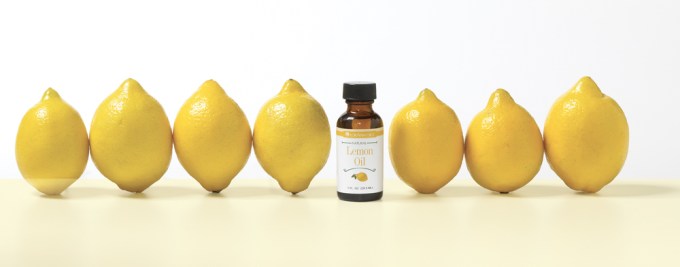

Can citrus essential oils be used in place of citrus zest?
Yes! No more grated knuckles! This is an easy way to add a punch of citrus flavor to glazes, toppings, sauces – even piecrust.
- In recipes calling for grated citrus zest or peel start with 1/8 teaspoon essential oil in place of 1 tablespoon of zest.
- Substitute lemon oil for lemon zest, lime oil for lime zest, orange oil for orange zest, and tangerine oil for tangerine zest.
Visit the Learn page on LorAnn Oils’ website to discover more about using and enjoying essential oils.
SaveSave